Showing posts with label Jeffcoat Photography Studio Museum. Show all posts

Thursday, April 18, 2013

New Exhibit at Jeffcoat Photography Studio Museum to Highlight Area Bands

Abilene Merchants Military Band in 1896.

The Jeffcoat Photography Studio Museum will be host to a new exhibit, Strike Up the Band: The Bands of Dickinson County and Abilene, showing now until September 2.
Near the turn of the twentieth century, it was common for most communities in America to have their own city band.  Dickinson County was no exception, and communities such as Talmage, Dayton, Hope, Herington, and many others boasted their own band.  Of the groups in Dickinson County, the Abilene Municipal Concert likely rose to the most prominence, marching in both inaugural parades for President Eisenhower in Washington, DC.
These stories will be shared through photographs taken over the span of one hundred years by the Jeffcoat Studio and other area photographers.  Strike Up the Band is now on display at the Jeffcoat Photography Studio Museum at 321 N. Broadway St, Abilene.  Please call (785) 263-9882 for more information.

Friday, December 7, 2012

Heritage Center and Jeffcoat Museum to Close for the Holidays

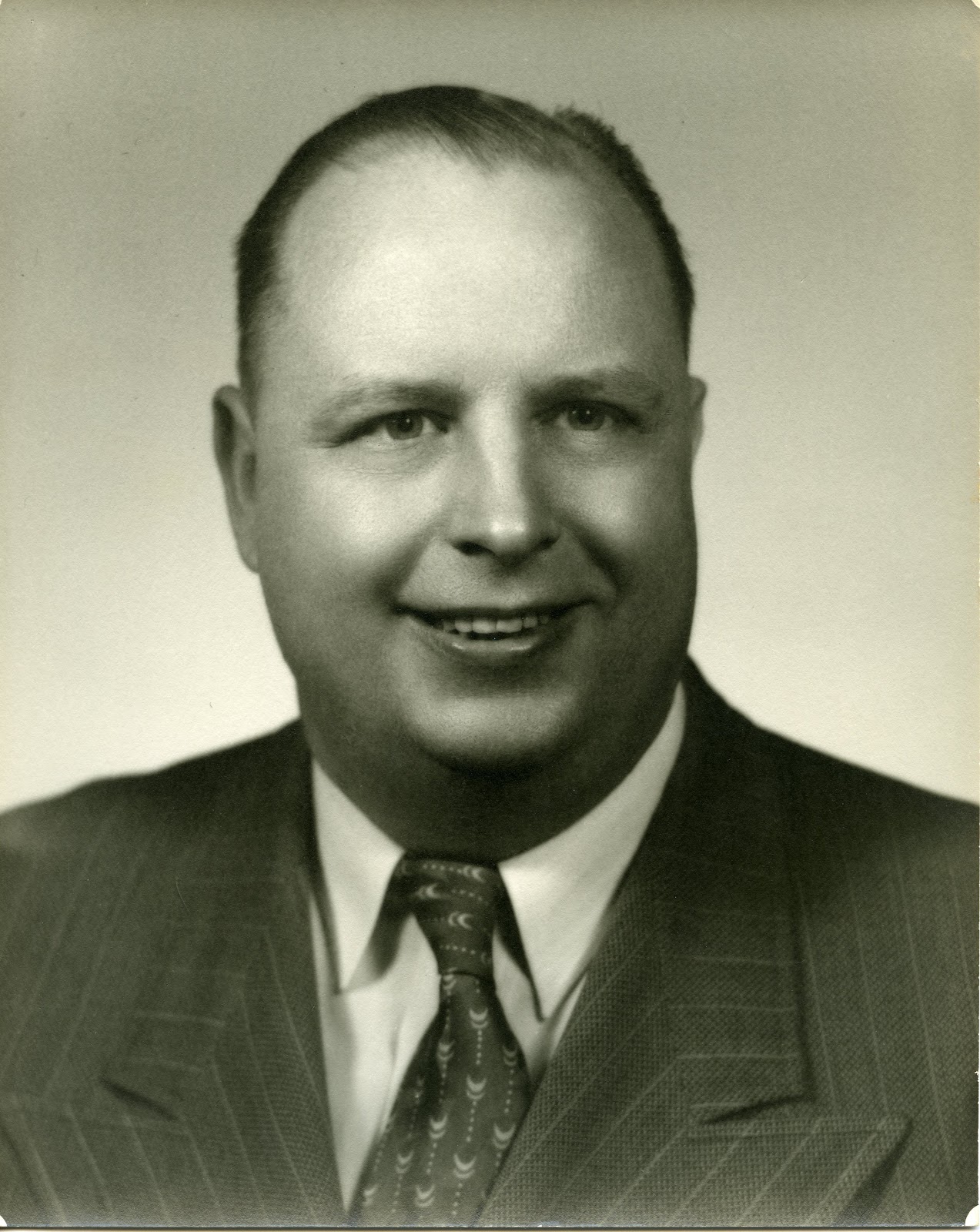
Vern Stroda. Photograph from the Jeffcoat
Photography Studio Museum collection.


The Dickinson County Heritage Center and Jeffcoat Photography Studio Museum will be closed for the holidays, December 20 through January 1, giving our staff time to celebrate this festive season.

The Heritage Center will reopen on January 2 for normal business, while the Jeffcoat Museum will be open Mondays and Tuesdays starting January 7, and open by appointment all other days.


Thursday, August 30, 2012

Upcoming Exhibit at the Jeffcoat Museum to Focus on the Studio's History

The Jeffcoat Photography Studio Museum in Abilene, Kansas is proud to announce a new exhibition highlighting the history of three generations of photographers in the Jeffcoat Studio family business.

Before the turn of the twentieth century, Lucy Fritz Jeffcoat trained herself in camera operation and retouching photographs.  She quickly found work for several photographers in the Abilene area.  Lucy was also the mother of four children, so she did most of her photographic work from her home.  Her son, Paul, became interested in the photographic process at a young age.  He began delivering his mother’s retouched photographs and was fascinated with the developing process.

Paul went into business as the Jeffcoat Photography Studio in 1921.  At the time, the studio was located in a small second story room in downtown Abilene.  The business soon outgrew this space, and Paul built a new building for the business in 1925.  This building still stands today, and is the current home of the Jeffcoat Photography Studio Museum.

Paul saw his business through the Great Depression, and was able to supplement his income by partitioning his building and renting half of his property to other area businesses.  Over the years, the north side of the building would be occupied by an optometrist, an insurance agency, and a shoe repairman.  The sound of pounding hammers repairing shoes could be a bit distracting during portrait sessions, but having these businesses next door helped the Jeffcoat Studio immensely. 

Paul passed the trade of photography down to his son, Bill.  Throughout his life, Bill was interested in documenting life and events in his hometown of Abilene.  Bill photographed several parades, visits from President Eisenhower, and of course, family portraits.  He enjoyed photography outside of his professional work, walking around Abilene and snapping pictures of anything that caught his eye.  His father, Paul, saw this differently.  He once told his son not to take photographs unless he could make an income from the image.  Bill would continue taking snapshots, choosing to develop his film at night to keep it a secret from his father.

Though the Jeffcoat Studio was primarily a portrait studio, the Jeffcoats were able to document the history of the Abilene area, creating images that will last several years to come.  The Jeffcoat Photography Studio Museum’s newest exhibit, The Family Behind the Lens: A Retrospective of the Jeffcoat Studio, begins on September 1 and runs through November 20.

You can learn more about the history of the Jeffcoat Studio and the history of Abilene by visiting the Jeffcoat Photography Studio Museum at 321 N. Broadway Street in Abilene.  For hours of operation or to schedule a private viewing, contact the museum at (785) 263-9882 or jeffcoatstudio@att.net.  Be sure to visit the museum’s website at jeffcoatstudio.com and their Facebook page at facebook.com/jeffcoatstudio.

Wednesday, August 29, 2012

Announcing Our Museums' Fall Hours

Beginning on September 3rd, the Dickinson County Historical Society has returned to our fall /winter hours from Labor Day to Memorial Day.  The Dickinson County Heritage Center will open from 9 am to 3 pm Monday through Friday, 10 am to 5 pm on Saturday, and 1 pm to 5 pm on Sunday.

The Jeffcoat Photography Studio Museum has also changed to its fall hours which are Monday and Tuesday 9 am to 4 pm or by appointment.

The public is invited to visit the Dickinson County Heritage Center, ride the carousel, and experience over 150 years of Dickinson County history.

Be sure to mark your calendar for the Chisholm Trail Day Festival, held on Saturday, October 6th, as well.

For more information on the Dickinson County Historical Society or on these events, contact 785.263.2681 or stop by our museum at 412 S. Campbell.  Become a part of the Society and help preserve our heritage.

Saturday, August 11, 2012

A Busy Summer for the Dickinson County Historical Society

The Dickinson County Historical Society has certainly had a busy time this summer.  Every summer, we try to offer our visitors and members a variety of educational and fun programs.

We kicked off June with our annual youth day camp, Pioneer Camp.  This proved to be a fantastic two weeks, involving many young kids in history in a real life way.  If you would like to see photos showing some of the activities these kids do, be sure to check out our Facebook page.

The Jeffcoat Photography Studio Museum continued their Abilene in the Fifties exhibit throughout the summer, showing visitors views of the 1951 flood, President Eisenhower's visits to his hometown, and several other interesting views of the 1950s.

Our Memories of the Prairie lecture series was a great success this year, with several of our membership coming to our programs every Saturday.  This series culminated with our Annual Ice Cream Social and a public screening of our new short documentary film C.L. Brown and Kansas Independent Telephony.  If you are interested in showing this film at a local club meeting or in the school classroom, please let us know.  We would love to share this film with as many people as possible.

Overall, it was a fantastic summer for the Dickinson County Historical Society.  We believe that sharing our county's history through public events is of paramount importance.  To help support future events from our society, we welcome donations to help keep our current programs running, and to allow for the creation of new and exciting programming.

Wednesday, June 20, 2012

Memories of the Prairie Lecture Series: Presentation Explores Kansas Frontier Photographer

The Dickinson County Historical Society in Abilene, Kansas along with the Jeffcoat Photography Studio Museum will host "Kansas Through the Lens of F.M. Steele," a presentation and discussion by Jim Hoy on Saturday, June 23 at 7:00pm at the Dickinson County Heritage Center located at 412 S. Campbell Street in Abilene.  Members of the community are invited to attend the free program, and can contact the Dickinson County Historical Society at (785) 263-2681 for more information.  This program is made possible by the Kansas Humanities Council.

In 1890, frontier photographer Francis Marion Steele set out from Dodge City to record cowboys, American Indians, wildlife, wheat harvesting, grain farming, sugar-beet factories, railroad building, community celebrations and festivals, small-town life, and studio portraits.  Hoy's presentation examines how Steele's work provides visual documentation of the Kansas character.

Jim Hoy is a professor of English and director of the Center for Great Plains Studies at Emporia State University.  He is an authority on the folklife of ranching, a topic on which he has lectured throughout the world.  Hoy's publications include ten books and over one hundred articles, and he is co-author of "Plains Folk," a syndicated newspaper column.

"Francis Marion Steele arrived in Dodge City in 1890 and immediately set out onto the prairies in a dark-room-mounted buggy to take photographs of cowboys," shared Hoy.  "After the end of the open range he photographed everything from wheat farming to railroad construction to small-town life, providing in the process documentation of Kansas and the southwestern plains in the transition from the open range to crop agriculture."

"Kansas Through the Lens of F.M. Steele" is part of the Kansas Humanities Council's Speakers Bureau featuring presentations and discussions about Kansas and what it means to be a Kansan over time and across generations.

The Kansas Humanities Council conducts and supports community-based humanities programs, serves as a financial resource through an active grant-making program, and encourages Kansans to participate in their communities.  For more information about KHC programs contact the Kansas Humanities Council at (785) 357-0359 or visit online at www.kansashumanities.org.

Wednesday, February 22, 2012

Abilene in the Fifties: Going on Now at the Jeffcoat Photography Studio Museum


The Jeffcoat Photography Studio Museum is pleased to announce a new exhibit, Abilene in the Fifties. This exhibit, which focuses on a formative time for the city of Abilene, will be featured now through August 11 at the museum.

The 1950s were a decade of change for our nation and Abilene. When Dwight D. Eisenhower announced that he would run for President of the United States in his hometown of Abilene, the city drew national attention. Journalists from all over the United States, including famed CBS anchor Edward R. Murrow, traveled to Abilene to cover Eisenhower’s big announcement. Throughout the decade, Abilene was featured in newspapers, magazines, and on television. Simply put, Abilene was on everyone’s minds. City leaders strove to make improvements to the town. Notable changes included a new county courthouse, Abilene High School, Old Abilene Town, and the Eisenhower Museum. Abilene was a city of growth.

Throughout the 1950s, the Jeffcoat Studio documented many events including the 1951 flood, Eisenhower’s hometown visits, and the Abilene Cowboy Band’s trip to the Presidential Inauguration. The Jeffcoat Photography Studio Museum’s photography exhibit, Abilene in the Fifties, will feature several images and stories of this tremendous decade.

The Jeffcoat Photography Studio Museum is located at 321 N. Broadway St. in Abilene, and is open Monday and Tuesday 9:00am-4:00pm, and by appointment any day of the week. The museum will also feature an open house reception on Sunday, February 26, 2:00pm-4:00pm. This will be a great opportunity to visit the museum in a casual setting, reminisce about the past, or learn about this period in Abilene’s history for the first time. For more information about the museum, or to schedule a private viewing, please call (785) 263-9882, email jeffcoatstudio@att.net, or find the museum on Facebook.

Wednesday, November 30, 2011

A Brief Look at Abilene's Historic Buildings: the Kirby House, Abilene Club

The Jeffcoat Photography Studio Museum is currently featuring the exhibit City on the Plains: A Look at Abilene Architecture until early January.  The following is a brief look at the Kirby House, which at one point was known as the Abilene Club.

Courtesy of the Jeffcoat Photography Studio Museum
Thomas Kirby was an Abilene banker who began his career working for another prominent banker, Conrad H. Lebold. Kirby built his home on the original site of the home of the father of the cattle town, Joseph G. McCoy. In later years, the home underwent a major redesign to become the Abilene Club, a men’s social club for Abilene businessmen. This group was a precursor to the Abilene Area Chamber of Commerce. Years later, the building was redesigned to return it to its original state, as it appears now.

Tuesday, November 22, 2011

Photographs of the Jeffcoat Museum's Current Exhibit on Abilene Architecture

City on the Plains: A Look at Abilene Architecture is on exhibit now at the Jeffcoat Photography Studio Museum.

A look at Abilene circa 1900.

The Hotel Sunflower in its heyday.

Several buildings are featured in the exhibit.

Photographs of Abilene High School.

Photographs of the Vacu-Blast Dome.

Several photographs of Abilene buildings and an Abilene map from 1908.

Can from Abilene's Belle Springs Creamery.

Photographs and artifacts representing many of Abilene's former businesses.

Tuesday, November 1, 2011

Spotlight on an Abilene Resident: Lilly Mae Helm

Views of the Past is currently featuring brief biographies of former Abilene residents. These photographs and biographies were recently featured in an exhibit at the Jeffcoat Photography Studio Museum. Even if you are not from Abilene or do not know these people, these stories are invaluable since they paint a portrait of small town life. Both the photograph and text of this post are courtesy of the Jeffcoat Photography Studio Museum. The following was written by Bill Jeffcoat about Lilly Mae Helm:

She was raised in Salina, Kansas. With her husband and some employees, they made a living hauling trash. Their two children were Dorothy and Dick.

This was a happy family; Lilly would do the bill collecting (for their trash service) each month and knew everybody in town.

She would be the first black lady in Abilene to be elected to the Abilene City Commission. She did her job as best as she could, but resigned and did not become Mayor. She was a member of the Catholic faith.

She loved her children and grandchildren, detested being pushed around, and was a fighter to protect what she felt was her right to do what she pleased. I think it is fair to say that she was a remarkable, strong willed lady.

Saturday, October 29, 2011

Spotlight on an Abilene Resident: Deane E. Ackers

Views of the Past is currently featuring brief biographies of former Abilene residents. These photographs and biographies were recently featured in an exhibit at the Jeffcoat Photography Studio Museum. Even if you are not from Abilene or do not know these people, these stories are invaluable since they paint a portrait of small town life. Both the photograph and text of this post are courtesy of the Jeffcoat Photography Studio Museum. The following was written by Bill Jeffcoat about Deane E. Ackers (1893-1966):


Hiram Ackers lived on Buckeye and 10th Street and was a very successful real estate broker. He and his wife raised two sons (one of them, Deane). Deane started in with C.L. Brown as an engineer with the United Power and Light Co. With its demise, he was instrumental in putting together a collection of power companies, forming the Kansas Power and Light Co. He was President and C.E.O. of that firm. Deane and his wife had no children and are buried in Topeka, Kansas. In high school, he was on the football team with Dwight D. Eisenhower.

Tuesday, October 25, 2011

Spotlight on an Abilene Resident: R.J. Long


Views of the Past is currently featuring brief biographies of former Abilene residents. These photographs and biographies were recently featured in an exhibit at the Jeffcoat Photography Studio Museum. Even if you are not from Abilene or do not know these people, these stories are invaluable since they paint a portrait of small town life. Both the photograph and text of this post are courtesy of the Jeffcoat Photography Studio Museum. The following was written by Bill Jeffcoat about R.J. Long (1880-1939):

R.J. Long came to Abilene from Miltonvale, Kansas, where he had been a druggist and worked for C.L. Brown in the utility business in the stock department. Somewhere along the line, he saw the handwriting on the wall that things were not going well (with the business), told Brown so, and handed in his resignation. Brown begged him to stay but to no avail.

R.J. then started his own investment business on Broadway; remodeled the building with his office upstairs and retail firms on the ground floor. Long Investments had the back part of the second floor.

With the Wall Street crash of 1929, and following the bankruptcy and death of C.L. Brown, investments were not easy to sell in a little town like Abilene.

R.J. married Mary Forney, daughter of J.K. Forney of the Belle Springs Creamery, and they had one son, Loraine.

Monday, October 24, 2011

Spotlight on an Abilene Resident: Howard Marshall

Views of the Past is currently featuring brief biographies of former Abilene residents. These photographs and biographies were recently featured in an exhibit at the Jeffcoat Photography Studio Museum. Even if you are not from Abilene or do not know these people, these stories are invaluable since they paint a portrait of small town life. Both the photograph and text of this post are courtesy of the Jeffcoat Photography Studio Museum. The following was written by Bill Jeffcoat about Howard Marshall:

Howard Marshall, born in Abilene, Kansas, but not with a silver spoon in his mouth! Yet, this did not deter him from being aggressive. His business seemed to thrive in insurance, small loans, and real estate.

In real estate, he developed the area now known as Charles Road, which he named after his son. Cement blocks were coming (into style) and many of these are built this way.

Howard’s office first started in the basement of the Commercial State Bank, run by Andy Blair. Later, he moved to where the VFW post is now located.

Friday, October 21, 2011

Spotlight on an Abilene Resident: Vic Viola

Views of the Past is currently featuring brief biographies of former Abilene residents. These photographs and biographies were recently featured in an exhibit at the Jeffcoat Photography Studio Museum. Even if you are not from Abilene or do not know these people, these stories are invaluable since they paint a portrait of small town life. Both the photograph and text of this post are courtesy of the Jeffcoat Photography Studio Museum. The following was written by Bill Jeffcoat about Vic Viola and his father, R.H. Viola:
Vic Viola

R.H. Viola conceived many businesses and one of these was a hardware store. This was during the 1930s and many in town felt it would not go, as two well established hardware stores were going, Shockey and Landis, and Minick and Taylor.

Viola ran a contest to name the store, offering $100 for the winner. The name selected: RHV Hardware, standing for Real, Honest, Vision.

His son Vic was put in charge and he had a knack for it. As you can see by this photo, he was a man whose expression is showing that he was good with customers. True to Viola tradition, he would cut a price and make the customer happy, creating a repeat customer. If one was not satisfied with a clerk, you could go directly to Vic to make a deal. The store did a wonderful volume of business. As were all the Viola sons, they were great contributors to the town’s civic things.

Thursday, October 20, 2011

Spotlight on an Abilene Resident: Henry B. Jameson

Views of the Past is currently featuring brief biographies of former Abilene residents. These photographs and biographies were recently featured in an exhibit at the Jeffcoat Photography Studio Museum. Even if you are not from Abilene or do not know these people, these stories are invaluable since they paint a portrait of small town life.  Both the photograph and text of this post are courtesy of the Jeffcoat Photography Studio Museum. The following was written by Bill Jeffcoat about Henry B. Jameson (1912-1986):

Henry did not graduate from high school, but he made the grade anyhow. Born and raised in Abilene, he was in the Press Corp, working for the Associated Press in Europe during WWII. He returned to his home town and teamed up with the Reflector-Chronicle, first as advertising manager, and then as his boss, Mr. Harger grew older, Henry became owner.

He was very popular in town, and he could do good writing. He ran a front page column of happenings of the day in town called “Ramblings,” and this was the first thing people read when they received their evening paper.

As the Eisenhower popularity grew, so did the newspaper and Henry. When out of town media arrived, the first thing they sought out was the editor of the paper. The paper and Henry became the connection for all important events concerning Ike and Abilene. Henry was “it” during the Eisenhower era, and he basked in the limelight and met a lot of very high up people in the media and from the White House. He wrote some books on Ike and on early Abilene days. Henry was a great contributor due to his outlook on the town and for the development of the Eisenhower Center.

Wednesday, October 19, 2011

Spotlight on an Abilene Resident: John H. Lehman

Views of the Past is currently featuring brief biographies of former Abilene residents.  These photographs and biographies were recently featured in an exhibit at the Jeffcoat Photography Studio Museum.  Both the photograph and text of this post are courtesy of the Jeffcoat Photography Studio Museum.  The following was written by Bill Jeffcoat about John H. Lehman:
He worked himself up off a farm south of Abilene, to become a leading attorney in town and was on the board of the Eisenhower Foundation. John was in on everything in town. When asked why he wanted to go into law, he replied, “As a young man, I drove around and saw that all the big homes were owned by either doctors or lawyers, and knowing I could not become a doctor, I thought I could make it in the practice of law.” He was a very imposing looking man, very tall, and always well dressed. He did much to help draft papers for the Eisenhower Center when it was being built, to buy the homes and property around this, so that nothing shabby would be around it. He knew all the important people in town and made the most of these contacts with large estate work. He loved Abilene history and on the second floor of his office in the old Sterl Building, he kept a regular museum of historic memorabilia which he adored showing off. Out of law school, he obtained his ground work as a partner of Matt Guilfoyle, another well known lawyer who did much for the town and was active in civic projects. I think we can be sure that Ike appreciated all the work that went on here, from all his friends in Abilene. Had it not been for these friends, the Eisenhower Center would not have grown to the size that it is.

Tuesday, October 18, 2011

Spotlight on an Abilene Resident: Henry Giles

The following is a brief bio on Henry Giles written by Bill Jeffcoat.  Both the text and photograph are courtesy of the Jeffcoat Photography Studio Museum.

Henry’s father was an early day Abilene business person who made money in the grain business and also was a charter member and organizer of the Citizens Bank, along with the Malott and Johntz families.

Here is Henry all dressed up fit to kill, so to speak. The reason is that he was active in the Masonic Lodge and each worshipful Master had their photo taken to hang in the Hall. He married Bea Young who clerked in the People’s Store, a department store like Cases and Pendergasts, and they had two girls.

Henry was a big hunter and fisherman. The old Giles family home is on West Fourth Street, where Henry’s sister, Ethel, lived until her death.